Trong IELTS Speaking Part 2, chủ đề về thiết bị điện tử xuất hiện khá thường xuyên. Trong đó, đề bài “describe an electronic device you use often” được xem là một topic quen thuộc nhưng không hề dễ nếu bạn thiếu ý tưởng và cách triển khai hợp lý. Trong bài viết dưới đây, The Catalyst for English sẽ mang đến cho bạn bài mẫu tham khảo sát đề, kèm theo gợi ý trả lời câu hỏi Part 3, giúp bạn đạt tới band điểm mong muốn.
I. Phân tích đề bài Describe an electronic device you use often
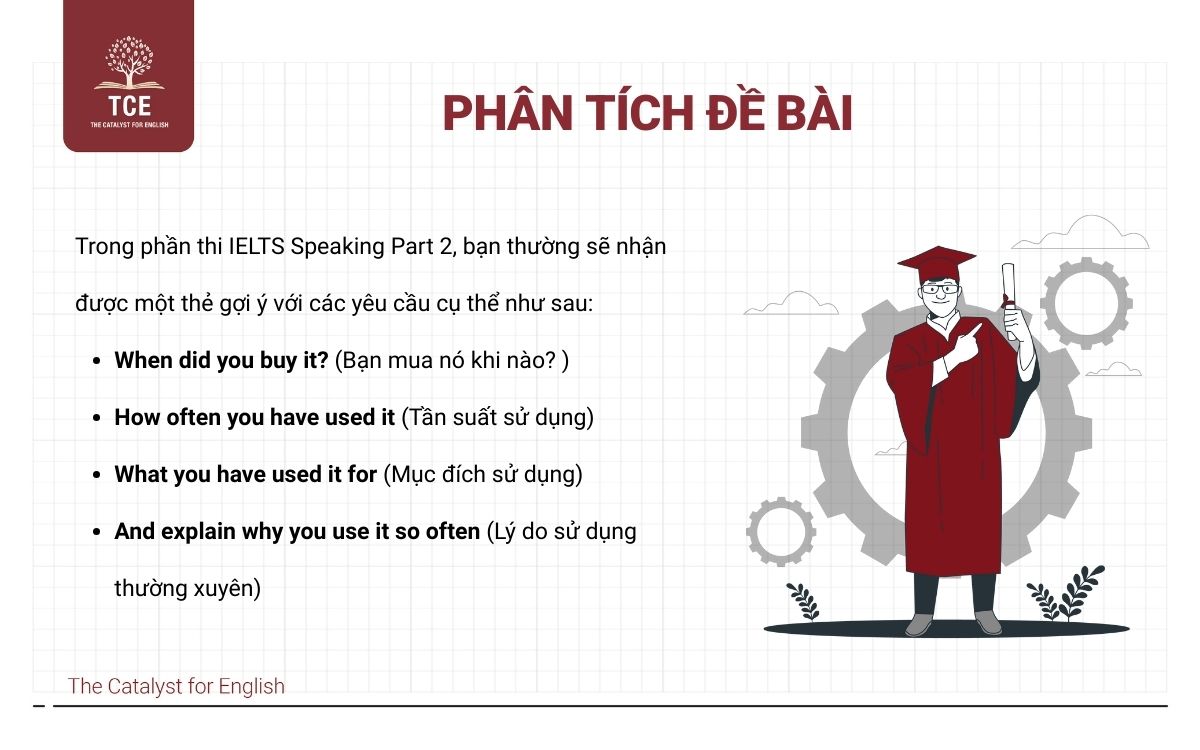
Đề bài “Describe an electronic device you use often” yêu cầu bạn phải bao quát được 4 khía cạnh cốt lõi. Việc bám sát các gợi ý (prompts) này giúp bạn không bị lạc đề và đảm bảo độ dài bài nói từ 1.5 đến 2 phút.
- When did you buy it?: Bạn mua nó khi nào? (Vào dịp sinh nhật, khi đỗ đại học, hay tự thưởng sau một dự án).
- How often you have used it (Tần suất sử dụng): Bạn có dùng nó hàng ngày không?
- What you have used it for (Mục đích sử dụng): Học tập (online courses), làm việc (emails, documents), giải trí (Netflix, Spotify), hay liên lạc (social media).
- And explain why you use it so often (Lý do sử dụng thường xuyên): Tính di động (Portability), hiệu năng (Performance), hay khả năng kết nối (Connectivity)….
II. Từ vựng cho chủ đề Technology
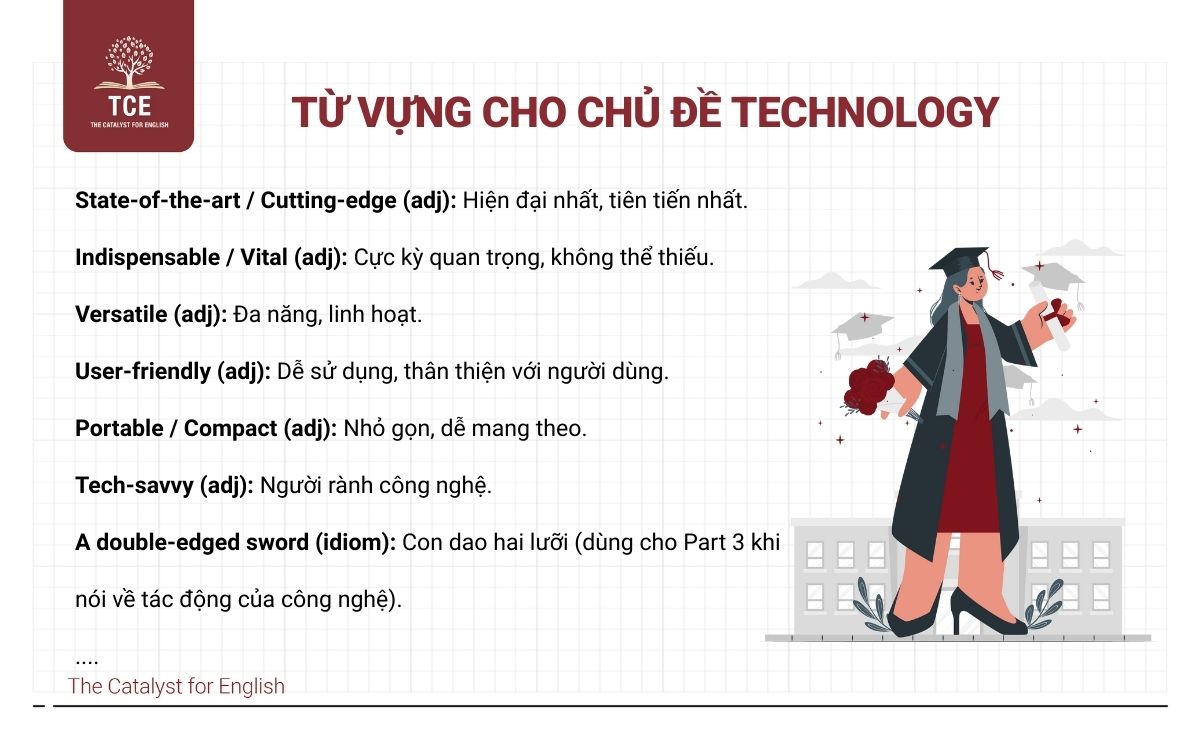
Một trong những công cụ vô cùng quan trọng cho bài thi Speaking đó là từ vựng. Ngay bây giờ hãy cùng team TCE giúp bạn “bỏ túi” các từ vựng cho đề describe an electronic device you use often nhé!
- State-of-the-art / Cutting-edge (adj): Hiện đại nhất, tiên tiến nhất.
- Indispensable / Vital (adj): Cực kỳ quan trọng, không thể thiếu.
- Versatile (adj): Đa năng, linh hoạt.
- User-friendly (adj): Dễ sử dụng, thân thiện với người dùng.
- Portable / Compact (adj): Nhỏ gọn, dễ mang theo.
- Tech-savvy (adj): Người rành công nghệ.
- A double-edged sword (idiom): Con dao hai lưỡi (dùng cho Part 3 khi nói về tác động của công nghệ).
- To be addicted to / To be hooked on (v): Nghiện cái gì đó.
- To streamline the process (v): Tối ưu hóa/đơn giản hóa quy trình.
- Breakthrough (n): Bước đột phá về công nghệ.
III. Bài mẫu Describe an electronic device you use often – Band 7.0+
When it comes to the electronic equipment that I utilize on a daily basis, the first that comes to my mind is my robot vacuum cleaner. While it might not be as indispensable as a smartphone, I firmly believe that it has revolutionized my daily routine and kept my living space much more breathable.
If I’m not mistaken, I bought this device about half a year ago during a big sale on an e-commerce platform. To be honest, I had been sitting on the fence for a while because of its price tag. However, since I have a busy work schedule and a cat that sheds a lot, I eventually decided to give it a go. Looking back now, it has been one of the most worthwhile investments I’ve ever made for my home.
Needless to say, I make use of this gadget every single day. I usually schedule it to start cleaning at 10 AM when I’m already at the office. By the time I get home, the floor is always spotless. On weekends, if the house feels a bit dusty, I might trigger a second cleaning cycle via the mobile app.
There are several reasons why this robot has become my all-time favorite appliance. Firstly, it does an impeccable job of picking up pet hair and fine dust that are hard to see with the naked eye. This not only keeps the house clean but also significantly improves the air quality, which is great for my allergies. Secondly, it spares me at least 30 minutes of sweeping and mopping every day, allowing me to unwind or focus on my hobbies instead.
Lastly, it has brought a sense of harmony to my household. We no longer have to argue about whose turn it is to clean the floors. It’s funny how my dad used to think it was a “lazy person’s toy,” but now he’s the one who meticulously maintains its brushes because he’s so impressed by its efficiency.
Bản dịch:
Khi nói về các thiết bị điện tử mà tôi sử dụng hàng ngày, cái tên đầu tiên xuất hiện trong tâm trí tôi chính là chiếc robot hút bụi. Mặc dù nó có thể không phải là vật bất ly thân như điện thoại thông minh, nhưng tôi tin chắc rằng nó đã cách mạng hóa thói quen hàng ngày của tôi và giúp không gian sống của tôi trở nên dễ thở hơn nhiều.
Nếu tôi nhớ không lầm, tôi đã mua thiết bị này khoảng nửa năm trước trong một đợt giảm giá lớn trên một nền tảng thương mại điện tử. Thú thật, tôi đã từng phân vân (lưỡng lự) khá lâu vì mức giá của nó. Tuy nhiên, vì lịch trình công việc bận rộn và lại nuôi một chú mèo rụng lông rất nhiều, cuối cùng tôi đã quyết định dùng thử. Nhìn lại bây giờ, đó là một trong những khoản đầu tư xứng đáng nhất mà tôi từng thực hiện cho ngôi nhà của mình.
Lẽ dĩ nhiên là tôi sử dụng thiết bị này mỗi ngày. Tôi thường đặt lịch cho nó bắt đầu dọn dẹp vào lúc 10 giờ sáng khi tôi đã ở văn phòng. Đến lúc tôi về nhà, sàn nhà luôn sạch bóng không một vết bụi. Vào cuối tuần, nếu cảm thấy nhà hơi bám bụi, tôi có thể kích hoạt chu kỳ dọn dẹp thứ hai thông qua ứng dụng trên điện thoại di động.
Có một vài lý do khiến chú robot này trở thành thiết bị gia dụng yêu thích nhất mọi thời đại của tôi. Thứ nhất, nó làm cực kỳ tốt việc hút lông thú cưng và những hạt bụi mịn khó có thể nhìn thấy bằng mắt thường. Điều này không chỉ giữ cho ngôi nhà sạch sẽ mà còn cải thiện đáng kể chất lượng không khí, điều này rất tuyệt vời cho tình trạng dị ứng của tôi. Thứ hai, nó giúp tôi tiết kiệm ít nhất 30 phút quét dọn và lau nhà mỗi ngày, cho phép tôi thư giãn hoặc tập trung vào các sở thích cá nhân.
Cuối cùng, nó đã mang lại sự hòa thuận cho gia đình tôi. Chúng tôi không còn phải tranh cãi về việc đến lượt ai phải lau nhà nữa. Thật buồn cười là bố tôi từng nghĩ nó là một “món đồ chơi của kẻ lười biếng”, nhưng giờ đây chính ông lại là người tỉ mỉ bảo trì chổi quét của nó vì quá ấn tượng trước hiệu quả mà nó mang lại.
Từ vựng ghi điểm:
| Từ |
Phiên âm |
Ý nghĩa |
| Utilize |
/ˈjuːtəlaɪz/ |
Sử dụng, tận dụng |
| Indispensable |
/ˌɪndɪˈspensəbl/ |
Rất cần thiết, không thể thiếu |
| Revolutionize |
/ˌrevəˈluːʃənaɪz/ |
Cách mạng hóa |
| Appliance |
/əˈplaɪəns/ |
Thiết bị, đồ gia dụng |
| Gadget |
/ˈɡædʒɪt/ |
Thiết bị điện tử nhỏ, tiện ích |
| Efficiency |
/ɪˈfɪʃnsi/ |
Hiệu quả, năng suất |
| Sitting on the fence |
/ˈsɪtɪŋ ɒn ðə fens/ |
Lưỡng lự, chưa quyết định được |
| Give it a go |
/ɡɪv ɪt ə ɡəʊ/ |
Thử làm/thử dùng cái gì đó |
| Worthwhile |
/ˌwɜːθˈwaɪl/ |
Đáng giá, xứng đáng |
| Investment |
/ɪnˈvestmənt/ |
Sự đầu tư |
| Meticulously |
/məˈtɪkjələsli/ |
Một cách tỉ mỉ, kỹ lưỡng |
| All-time favorite |
/ɔːl taɪm ˈfeɪvərɪt/ |
Yêu thích nhất từ trước đến nay |
| Spotless |
/ˈspɒtləs/ |
Sạch bóng kin kít, không tì vết |
| Impeccable |
/ɪmˈpekəbl/ |
Hoàn hảo, không chê vào đâu được |
| Naked eye |
/ˈneɪkɪd aɪ/ |
Mắt thường |
| Unwind |
/ˌʌnˈwaɪnd/ |
Nghỉ ngơi, thư giãn đầu óc |
| Harmony |
/ˈhɑːməni/ |
Sự hòa thuận, sự hài hòa |
| Shed |
/ʃed/ |
Rụng (lông, lá…) |
| Spare someone time |
/speə(r) ˈsʌmwʌn taɪm/ |
Tiết kiệm thời gian cho ai đó |
IV. Bài mẫu describe an electronic device you use often part 3
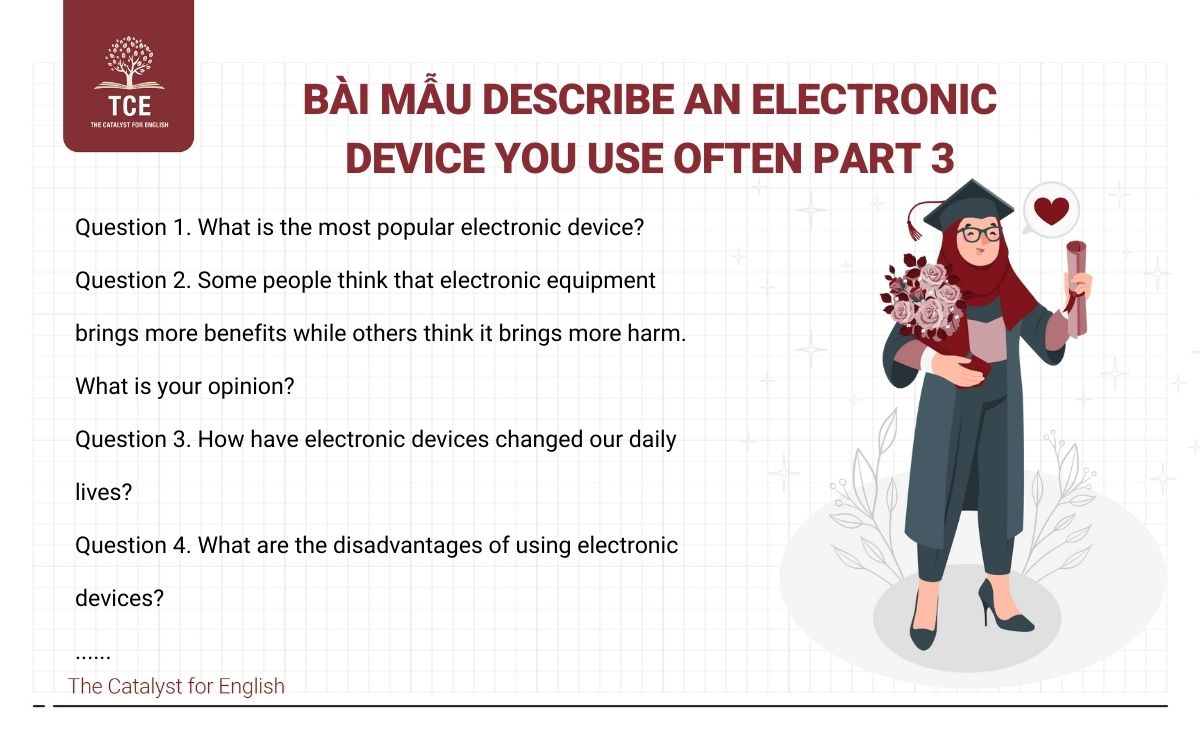
Question 1. What is the most popular electronic device?
I think the smartphone is the most ubiquitous electronic device, having evolved from a basic communication tool into an indispensable companion. The primary reason for its universal appeal is its unparalleled versatility; these handy gadgets function as high-performance pocket computers that integrate a wealth of features, from GPS navigation and mobile banking to high-quality photography. This all-in-one nature allows users to streamline their daily tasks and stay connected to the digital world on the go. For instance, instead of carrying a separate camera, a physical map, and a bulky laptop, a person can now manage their entire professional and personal life through a single, compact device, making it a universal necessity across all age groups.
Question 2. Some people think that electronic equipment brings more benefits while others think it brings more harm. What is your opinion?
In my opinion, the benefits of electronic devices are far greater than the downsides because they really help us get things done faster. While it’s true that some people might become a bit lazy or inactive, these tools allow us to look up anything in seconds and stay in touch with anyone, no matter where they are. For example, thanks to laptops, many people can now work from home or anywhere they like. So, I believe that as long as we use them wisely, technology is a huge help to our lives rather than a problem.
Question 3. How have electronic devices changed our daily lives?
From my point of view, electronic devices have completely changed the way we live by making everything much faster and easier. Instead of doing things by hand which takes forever, we can now get them done in a snap on our phones or laptops. For example, thanks to high-speed internet, we don’t need to go to a bank anymore; we can just transfer money or join a meeting while sitting in a coffee shop. Because of this, technology is no longer just a luxury; it has become something we can’t live without because it helps us save so much time.
Question 4. What are the disadvantages of using electronic devices?
I have to admit that relying too much on gadgets can cause some real problems, especially for our health and how we talk to people. Spending way too much time looking at screens makes us sit around all day, which is bad for our bodies and makes us lose the habit of talking face-to-face. For example, a lot of young people nowadays prefer chatting online instead of hanging out in person, and this can make them feel lonely or disconnected from their friends and family. So, even though these devices are handy, they can sometimes get in the way of our health and real-life relationships.
Question 5. Do you think people rely too much on technology?
I definitely think we depend way too much on technology these days, sometimes to the point where we feel lost without it. We’ve stopped thinking for ourselves because we let apps and smart tools do all the work for us. A perfect example is how we use GPS all the time. Nowadays, if someone’s phone runs out of battery, they might not even know how to find their way home in their own city. So, even though gadgets make life easier, I feel like we’ve become a bit helpless whenever we’re not plugged into the digital world.
Question 6. When should parents allow their children to have a phone?
I think parents should wait until their kids are mature enough, maybe around 12 or 13 years old, before giving them a phone. This is really important because younger children often don’t know how to stay safe or handle the risks on the internet. For example, when a child starts middle school, having a phone is handy for calling their parents, but they need to learn how to use it wisely and not spend too much time on it. In the end, it’s more about how responsible the child is rather than just how old they are.
Question 7. Can phones be disruptive sometimes?
Definitely, phones can be a huge distraction, and they often get in the way of our work or even our conversations with friends. Because we keep getting non-stop notifications, it’s really hard to stay focused on one thing for a long time. For instance, when you’re studying or working, just one simple buzz from your phone can break your focus, and it takes a while to get back on track. So, even though phones are useful, they can really mess up our productivity if we don’t know when to put them away.
Question 8. Are people often impolite while using their phone?
Sadly, I think many people forget their manners and can be quite rude without even realizing it when they’re on their phones. A common habit is ignoring the people right in front of them just to check a message or an app, which can really hurt relationships and show a lack of respect. For example, you’ll often see people scrolling through their feeds during a nice dinner or while someone is talking to them, making others feel ignored or left out. So, I’d say that phones definitely make it harder to be polite and stay connected in the real world.
Question 9. In your opinion, is technology making people’s jobs easier? Why or why not?
I definitely think technology is a huge help because it takes care of all the boring, repetitive tasks for us. This doesn’t just cut down on mistakes, but it also frees up our time to focus on more important and creative parts of the job. For example, instead of drawing everything by hand, architects now use smart software to create 3D models in no time. So, even though we have to keep learning new things, I’d say technology makes working a lot less stressful and much more efficient.
Trên đây là bài mẫu IELTS Speaking Part 2 cùng một số câu hỏi follow up Part 3 cho đề “describe an electronic device you use often”. TCE hi vọng rằng những cấu trúc câu và từ vựng được giới thiệu trong bài sẽ giúp các bạn tự tin hơn khi gặp các câu hỏi tương tự trong phòng thi IELTS. Đừng quên luyện tập thường xuyên để nâng cao phản xạ và đạt kết quả IELTS Speaking như mong muốn nhé!
Nếu bạn muốn phát triển đồng đều các kỹ năng và có một kế hoạch nâng band điểm rõ ràng, các khóa luyện thi IELTS chuyên sâu tại The Catalyst for English sẽ là lựa chọn phù hợp, giúp bạn được đồng hành và hướng dẫn trực tiếp bởi đội ngũ giảng viên giàu kinh nghiệm.
 thecatalyst.edu.vn




![[ IELTS Speaking Part 2] Describe an electronic device you use often](https://thecatalyst.edu.vn/blogs/wp-content/uploads/2026/02/describe-an-electronic-device-you-use-often.jpg)