Chủ đề Describe a quiet place you like to go là dạng bài quen thuộc trong IELTS Speaking Part 2. Để làm tốt đề này, bạn cần bám sát cue card, miêu tả cụ thể không gian yên tĩnh và tránh nói quá chung chung. Trong bài viết dưới đây, The Catalyst for English sẽ cung cấp bài mẫu và từ vựng hữu ích giúp bạn tự tin hơn khi gặp chủ đề này trong Part 2 và Part 3 nhé.
I. Phân tích đề bài describe a quiet place you like to go
Chủ đề này thuộc nhóm Description (Miêu tả) trong IELTS Speaking Part 2. Điểm mấu chốt của đề bài không chỉ nằm ở từ “place” (địa điểm) mà quan trọng hơn là tính từ “quiet” (yên tĩnh). Người nói cần làm nổi bật được sự tương phản giữa sự ồn ào của đời sống thường nhật và sự tĩnh lặng của không gian được chọn.
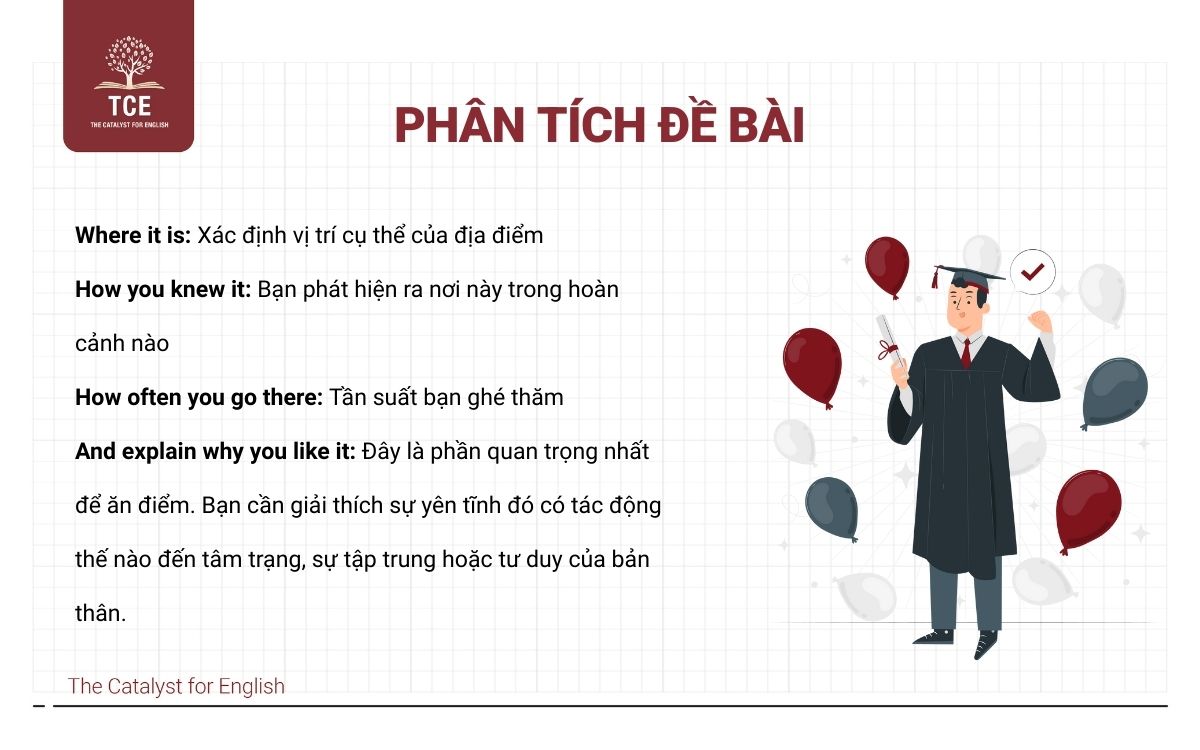
Thông thường, một tấm thẻ gợi ý (Cue Card) cho chủ đề này sẽ bao gồm 4 yêu cầu cốt lõi. Việc bám sát các gợi ý này giúp bạn duy trì sự mạch lạc (Coherence) và đảm bảo bài nói kéo dài đủ 2 phút.
Where it is: Xác định vị trí cụ thể của địa điểm (trong thành phố, ở vùng quê, hay một góc nhỏ trong nhà).
How you knew it: Bạn phát hiện ra nơi này trong hoàn cảnh nào (qua lời giới thiệu của bạn bè, tình cờ đi ngang qua, hay là nơi gắn liền với tuổi thơ).
How often you go there: Tần suất bạn ghé thăm (hàng ngày để làm việc, hay chỉ vào những dịp cuối tuần khi cần “sạc” lại năng lượng).
And explain why you like it: Đây là phần quan trọng nhất để ăn điểm. Bạn cần giải thích sự yên tĩnh đó có tác động thế nào đến tâm trạng, sự tập trung hoặc tư duy của bản thân.
II. Lập dàn ý describe a quiet place you like to go
Sau khi đã hiểu đề, hãy cùng The Catalyst for English (TCE) lên dàn ý cho đề bài describe a quiet place you like to go nhé!
Introduction: Giới thiệu địa điểm yên tĩnh bạn chọn
Trong phần mở đầu, bạn cần đi thẳng vào vấn đề một cách trực tiếp nhưng vẫn mang tính dẫn dắt để tạo thiện cảm.
Xác định địa điểm: Tên của nơi đó (ví dụ: a local botanical garden, a rooftop café, a private study room).
Đặc điểm nổi bật: Sử dụng một cụm danh từ mạnh để định nghĩa không gian này.
Cảm xúc chung: Cảm giác tổng thể khi nghĩ về nơi này (thư thái, an tâm).
Where it is: Vị trí và cách bạn biết đến nơi này
Mục tiêu của phần này là cung cấp bối cảnh để giám khảo hình dung được không gian của bạn.
Vị trí địa lý: Nằm ở trung tâm thành phố bận rộn hay ở một vùng ngoại ô hẻo lánh.
Key phrases: Off the beaten track (nơi ít người biết), tucked away in a small alley (nằm sâu trong ngõ nhỏ), within walking distance of my house.
Cơ duyên biết đến: Một sự kiện ngẫu nhiên hoặc một lời giới thiệu.
Key phrases: Stumbled upon it by chance (tình cờ thấy), recommended by a close friend, discovered it during my daily commute.
What you do there: Các hoạt động giúp thư giãn và tập trung
Hoạt động giải trí: Đọc sách, nghe nhạc nhẹ, hoặc chỉ đơn giản là ngắm nhìn thiên nhiên.
Key phrases: Immerse myself in a gripping novel, contemplate life, observe the world going by.
Hoạt động công việc/học tập: Nếu đó là nơi bạn đến để tập trung cao độ.
Key phrases: Work on my assignments, engage in deep work, brainstorming ideas without distractions.
Thời gian thường lui tới: Buổi sáng sớm hoặc những lúc cảm thấy quá tải (overwhelmed).
Why you like it: Cảm xúc cá nhân và giá trị của sự yên tĩnh
Nơi này giúp bạn phục hồi năng lượng như thế nào.
Kết luận: Khẳng định lại tầm quan trọng của địa điểm này đối với sức khỏe tinh thần của bạn.
III. Từ vựng về chủ đề describe a quiet place you like to go
Để có thể xử lý thật trôi chảy describe a quiet place you like to go, chúng mình hãy cùng The Catalyst for English (TCE) củng cố vốn từ vựng về chủ đề này trước khi nói nhé:
Từ
Ý nghĩa
Tranquil / Serene
Yên bình, thanh tĩnh (thường dùng cho phong cảnh thiên nhiên hoặc không gian rộng)
Secluded / Isolated
Hẻo lánh, tách biệt với thế giới bên ngoài
Pristine
Thuần khiết, chưa bị tác động (thường dùng cho những nơi thiên nhiên hoang sơ)
Hushed
Yên lặng như tờ (thường dùng cho không gian thư viện hoặc giáo đường)
An oasis of calm
Một ốc đảo bình yên (ẩn dụ cho một nơi yên tĩnh giữa đô thị ồn ào)
Sequestered
Được ẩn mình, tách biệt khỏi sự náo nhiệt
To unwind / To decompress
Thả lỏng, giải tỏa căng thẳng sau giờ làm việc
To recharge my batteries
Nạp lại năng lượng (sau khi đã kiệt sức)
To immerse myself in…
Đắm mình vào cái gì đó (một cuốn sách, hoặc thiên nhiên)
To let my hair down
Nghỉ ngơi, thư giãn hoàn toàn
To contemplate / To meditate
Suy ngẫm về cuộc sống hoặc thiền định
To leave the world behind
Bỏ lại thế giới bộn bề phía sau
To find my inner peace
Tìm lại sự bình an trong tâm hồn
Peace and quiet
Sự bình yên và tĩnh lặng
Far from the madding crowd
Cách xa đám đông xô bồ, náo nhiệt
A stone’s throw from…
Rất gần với cái gì đó
The hustle and bustle of city life
Sự hối hả và nhộn nhịp của cuộc sống thành thị
Get away from it all
Đi đâu đó để thoát khỏi áp lực hằng ngày
Music to my ears
Một điều gì đó khiến bạn rất vui (ví dụ: tiếng chim hót hoặc tiếng gió tại nơi đó)
IV. Bài mẫu describe a quiet place you like to go part 2
Today, I would like to talk about a unique sanctuary of peace and quiet that I always yearn for, especially when life throws me a curveball. It is my father’s well-manicured garden, which has become my ultimate hideaway from the pressures of modern life.
This garden is nestled in a serene corner of my provincial hometown, far from the hustle and bustle of the city where I currently work. I’ve known this place since I was a young child, as my father is a dedicated florist. His passion for greenery turned a simple plot of land into a tranquil oasis that feels like a different world altogether.
Whenever I return home, I find myself spending most of my free time helping my father with various gardening tasks. We often spend hours together seeding, getting rid of weeds, and trimming stems to help the flowers grow perfectly. Although these manual tasks are simple, I find them incredibly therapeutic. Engaging in these activities allows me to decompress, clear my mind of all worries, and truly immerse myself in nature. It is the perfect way for me to recharge my batteries after a long, exhausting week.
There are numerous reasons why I cherish this place. Firstly, it is entirely tranquil; since the garden is surrounded by immense paddy fields, the only sounds you can hear are the breezes gently blowing through the leaves and birds chirping on the tree tops. Moreover, the visual beauty of the garden is breathtaking, especially in spring when it is packed with gorgeously blossoming flowers like burgundy red dahlias and mellow yellow chrysanthemums. I am always enraptured by this glorious scenery, which reminds me of the simple beauties of life. It’s not just a garden; it’s a place that heals my soul and helps me find my inner peace.
Phân tích từ vựng:
Sanctuary of peace and quiet: Một nơi trú ẩn bình yên và tĩnh lặng (Thay cho “a quiet place”).
Well-manicured garden: Khu vườn được cắt tỉa, chăm sóc kỹ lưỡng.
Ultimate hideaway: Nơi chốn (ẩn náu) lý tưởng nhất.
Nestled in a serene corner: Nằm nép mình trong một góc yên tĩnh.
Immense paddy fields: Những cánh đồng lúa bao la.
Yearn for: Khao khát, mong mỏi điều gì đó.
Incredibly therapeutic: Cực kỳ có tính trị liệu/chữa lành (Dùng để nói về các hoạt động giúp giảm stress).
Decompress: Giải tỏa áp lực (Thay cho “relax”).
Cherish: Trân trọng, yêu thương.
Enraptured by: Bị mê hoặc, cuốn hút hoàn toàn bởi…
Heals my soul: Chữa lành tâm hồn tôi.
Find my inner peace: Tìm thấy sự bình yên trong tâm khảm.
Life throws me a curveball: Khi cuộc sống xảy ra những điều bất ngờ, khó khăn ngoài dự tính.
The pressures of modern life: Những áp lực của cuộc sống hiện đại.
Hustle and bustle: Sự hối hả và nhộn nhịp (Thường dùng miêu tả thành phố).
Recharge my batteries: Nạp lại năng lượng (Sau một thời gian mệt mỏi).
A different world altogether: Một thế giới hoàn toàn khác biệt.
Dedicated florist: Một người trồng hoa tận tâm.
Getting rid of weeds: Nhổ cỏ dại.
Trimming stems: Tỉa cành/cuống hoa.
Breathtaking: Đẹp đến nghẹt thở.
Gorgeously blossoming: Nở rộ một cách rực rỡ.
Glorious scenery: Phong cảnh huy hoàng, lộng lẫy.
V. Bài mẫu describe a quiet place you like to go part 3
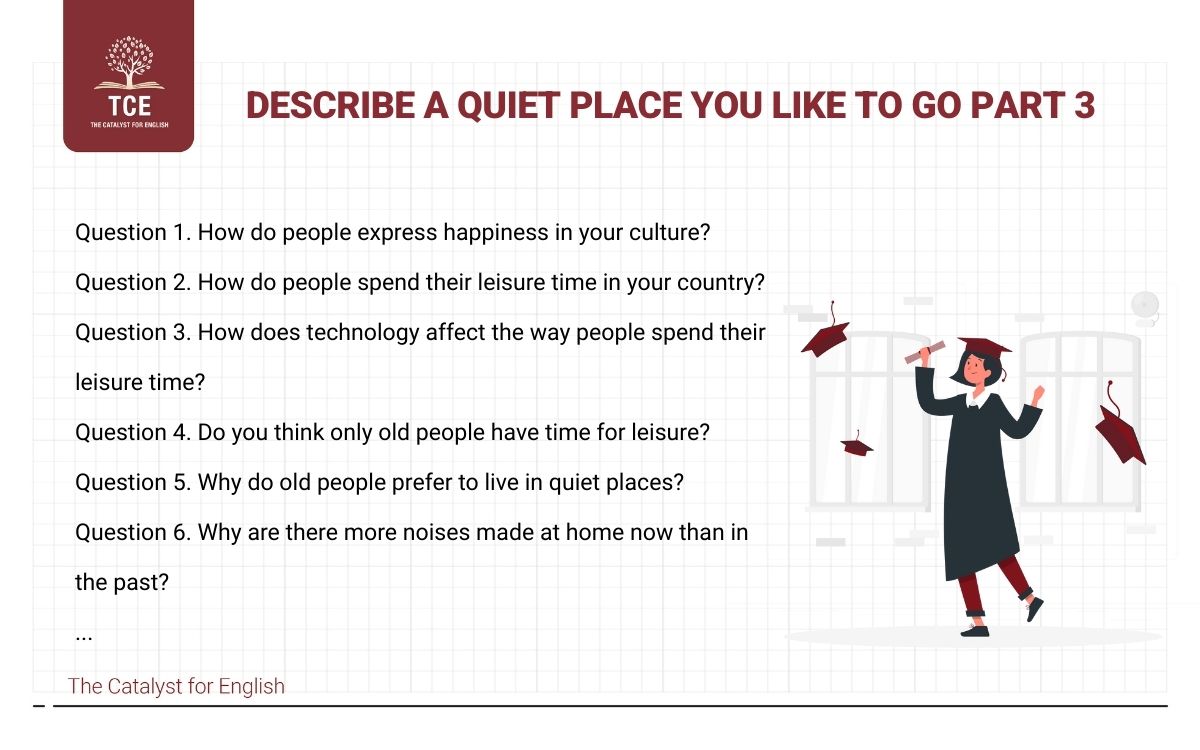
Question 1. How do people express happiness in your culture?
In Vietnamese culture, people primarily express happiness through communal activities, such as gathering for a hearty meal or sharing a drink with friends. Instead of grand gestures, we often manifest joy through radiant smiles and a supportive attitude toward those around us. Moreover, during festive seasons like Tet, happiness is vividly displayed through acts of giving and spending quality time with family to strengthen our emotional bonds.
Question 2. How do people spend their leisure time in your country?
In my country, people typically spend their leisure time socializing over coffee or gathering for street food to catch up with friends and family. Younger generations tend to immerse themselves in digital entertainment or hit the gym, while older people often prefer peaceful activities like exercise in public parks. Regardless of the activity, the focus is usually on strengthening social bonds and finding a balance after a hectic work week.
Question 3. How does technology affect the way people spend their leisure time?
Technology has significantly transformed leisure time by making entertainment instantly accessible through smartphones and streaming platforms. While many people now spend their free time scrolling through social media or gaming, which can lead to a more sedentary lifestyle, others use apps to discover new hobbies or connect with friends globally. Ultimately, while technology offers unparalleled convenience, it also creates a challenge in balancing screen time with physical, face-to-face interactions.
Question 4. Do you think only old people have time for leisure?
I definitely disagree with this view, as people of all ages strive to carve out time for leisure to maintain their mental well-being. While retirees may have more abundant free time, younger people and working adults actively seek pockets of relaxation during weekends or after work to decompress. Ultimately, leisure is a universal necessity, and regardless of age, everyone finds ways to balance their responsibilities with activities that bring them joy.
Question 5. Why do old people prefer to live in quiet places?
Elderly people often prefer quiet locations because these environments provide a sense of tranquility that is essential for their physical and mental health. As people age, they tend to become more sensitive to the constant noise pollution of urban areas, which can disrupt their sleep and cause unnecessary stress. Therefore, living in a peaceful setting allows them to enjoy a slower pace of life and find contentment in simple activities like gardening or taking a stroll.
Question 6. Why are there more noises made at home now than in the past?
Modern homes are noisier today primarily due to the proliferation of electronic devices, ranging from high-powered kitchen appliances to sophisticated home entertainment systems. Unlike in the past, almost every family member now owns multiple gadgets like smartphones or laptops, which constantly emit notifications and digital sounds. Additionally, the shift towards open-plan living spaces and the use of hard building materials often cause sound to echo more, making the overall acoustic environment much louder than before.
Question 7. Is it easy to find a quiet place in your country? Why?
Actually, finding a quiet place in my country is becoming increasingly challenging, especially in major cities where urbanization is at its peak. The streets are often filled with the unceasing hum of traffic and construction activities, which makes it hard to escape the noise. However, one can still find solitude by visiting remote countryside areas or secluded pagodas, where the pace of life remains slow and the atmosphere is truly peaceful.
Question 8. Why do some people like some noise in the background when they are working or studying?
Some individuals prefer having background noise because it creates a controlled auditory environment that prevents sudden, jarring sounds from breaking their concentration. For many, a moderate level of ambient sound, like the chatter in a coffee shop, actually stimulates creativity and prevents the feeling of isolation. Ultimately, this “white noise” helps to mask distractions, allowing them to enter a state of deep focus more easily than they would in a pin-drop silent room.
Question 9. Why do people like to spend time in quiet places?
People gravitate toward quiet places because these environments offer a temporary escape from the relentless noise and stress of modern life. Spending time in a tranquil setting allows individuals to recharge their mental energy, improve their focus, and reflect on their personal thoughts without interruption. Ultimately, such peaceful spots serve as a sanctuary for relaxation, helping people to find their inner balance and maintain better overall emotional well-being.
VI. Thi thử IELTS toàn diện tại The Catalyst for English
Để biến kiến thức lý thuyết thành kết quả thực tế trong kỳ thi IELTS, bạn cần một lộ trình học tập bài bản và phù hợp. Bởi ngoài vốn từ, giám khảo còn đánh giá phát âm, độ trôi chảy và cách triển khai ý tưởng. Vậy đâu là hướng đi hiệu quả?
Bước 1: Đánh giá trình độ. Tham gia thi thử IELTS 4 kỹ năng tại The Catalyst giúp bạn xác định chính xác năng lực hiện tại, làm quen với môi trường thi thật và nhận phản hồi chi tiết về điểm mạnh, điểm cần cải thiện.
Bước 2: Cá nhân hóa lộ trình. Dựa trên kết quả thi thử, các khóa học IELTS tại The Catalyst sẽ xây dựng kế hoạch học tập phù hợp với từng bạn, tập trung khắc phục điểm yếu, củng cố nền tảng và tối ưu chiến lược làm bài để nâng cao điểm số.
Hy vọng bài viết trên đã giúp bạn tự tin hơn khi gặp chủ đề Describe a quiet place you like to go trong IELTS Speaking. Đừng quên theo dõi chuyên mục IELTS Speaking để tham khảo thêm nhiều bài mẫu và từ vựng hữu ích cho các chủ đề thường gặp trong kỳ thi nhé.
Xin chào, mình là Phương ThảoCo-founder tại The Catalyst for English. Với hơn 7 năm kinh nghiệm đồng hành cùng các bạn học viên trên con đường chinh phục tiếng Anh, IELTS và sở hữu điểm Overall 8.5, mình luôn mong muốn chia sẻ những phương pháp học tập hiệu quả nhất để giúp bạn tiết kiệm thời gian và đạt được kết quả cao.
Tại The Catalyst for English, mình cùng đội ngũ giáo viên luôn đặt 3 giá trị cốt lõi: Connected – Disciplined – Goal-oriented (Kết nối – Kỉ luật – Hướng về kết quả) lên hàng đầu. Bởi chúng mình hiểu rằng, mỗi học viên đều có những điểm mạnh và khó khăn riêng, và vai trò của "người thầy" là tạo ra một môi trường học tập thân thiện, luôn luôn thấu hiểu và đồng hành từng học viên, giúp các bạn không cảm thấy "đơn độc" trong một tập thể.
Những bài viết này được chắt lọc từ kinh nghiệm giảng dạy thực tế và quá trình tự học IELTS của mình, hy vọng đây sẽ là nguồn cảm hứng và hành trang hữu ích cho các bạn trên con đường chinh phục tiếng Anh.
 thecatalyst.edu.vn