Chủ đề Describe an item on which you spent more than expected là một trong những chủ đề quen thuộc của bài thi IELTS Speaking. Trong bài viết này, The Catalyst for English sẽ gợi ý cho bạn những từ vựng, idioms hữu ích cùng bài mẫu band 7.5, giúp bạn trả lời tự nhiên và ghi điểm với giám khảo.
I. Phân tích đề bài describe an item on which you spent more than expected
Việc nắm vững bản chất của đề bài là bước đệm quan trọng nhất để tránh lạc đề và đảm bảo tiêu chí Coherence and Cohesion.
Đề bài “Describe an item on which you spent more than expected” thuộc nhóm chủ đề Personal Experience (Trải nghiệm cá nhân) kết hợp với Objects (Đồ vật). Để xử lý tốt, bạn cần lưu ý 3 trọng tâm sau:
Thì của động từ: Chủ yếu sử dụng thì quá khứ đơn để kể về sự việc đã xảy ra. Tuy nhiên, bạn có thể dùng thì hiện tại đơn khi mô tả đặc điểm hiện tại của món đồ đó.
Mấu chốt của đề: Bạn phải làm nổi bật được sự tương phản giữa “ngân sách dự kiến” và “chi phí thực tế”. Nếu chỉ kể về một món đồ đắt tiền mà không nhắc đến việc nó vượt quá mong đợi, bạn sẽ mất điểm về tiêu chí Task Response.
Đối tượng mô tả: Nên chọn những món đồ có nhiều chi tiết để nói như đồ công nghệ, phụ kiện thời trang hoặc đồ gia dụng thông minh.
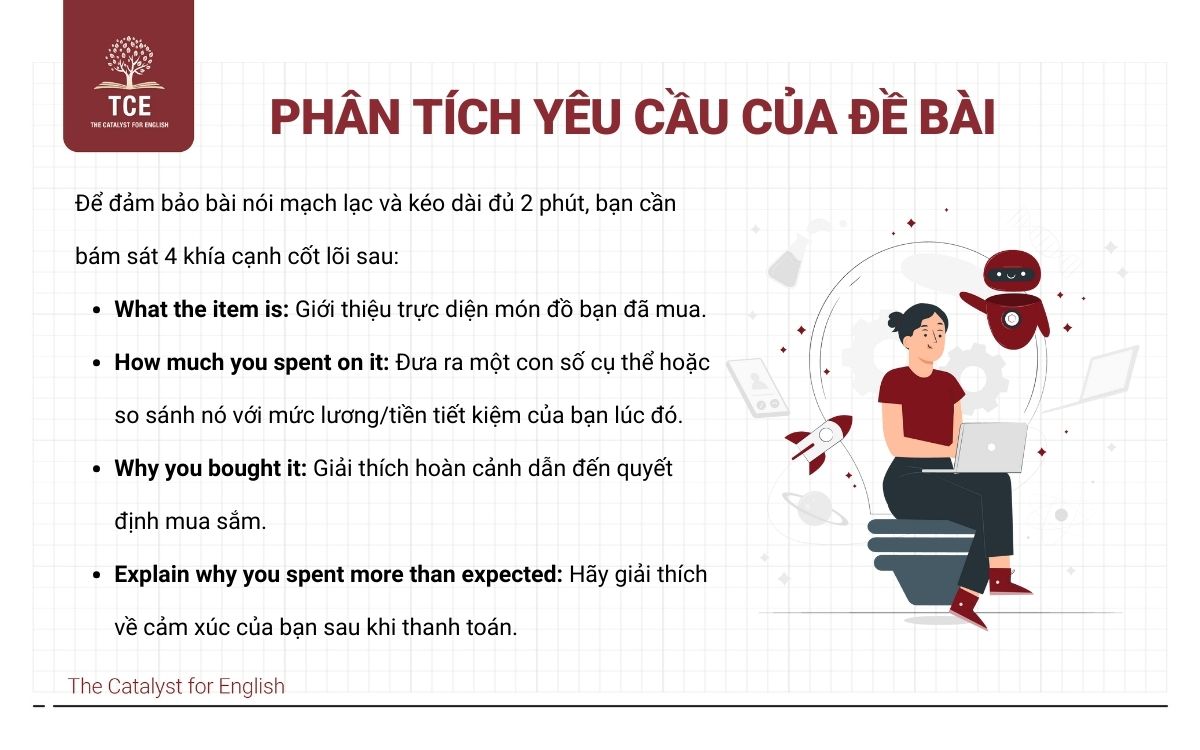
Để bài nói dài 2 phút mà không bị ngắt quãng, bạn nên trả lời theo 4 cue card sau đây:
What the item is (Món đồ đó là gì): Giới thiệu trực diện món đồ bạn đã mua. Bên cạnh đó, bạn hãy thêm thắt thông tin về thời điểm và địa điểm (ví dụ: nhân dịp sinh nhật, trong một chuyến du lịch, hoặc tại một trung tâm thương mại sang trọng).
How much you spent on it (Bạn đã chi bao nhiêu): Đưa ra một con số cụ thể hoặc so sánh nó với mức lương/tiền tiết kiệm của bạn lúc đó.
Why you bought it (Tại sao bạn lại mua nó): Giải thích hoàn cảnh dẫn đến quyết định mua sắm. Có thể là do món đồ quá đẹp, do bị nhân viên tư vấn thuyết phục, hoặc do bạn nhận ra những tính năng vượt trội mà món đồ rẻ hơn không có.
Explain why you spent more than expected (Tại sao bạn chi nhiều hơn dự kiến): Đây là phần quan trọng nhất để mở rộng bài nói. Hãy giải thích về cảm xúc của bạn sau khi thanh toán. Bạn cảm thấy hài lòng vì “tiền nào của nấy” hay cảm thấy hối hận vì đã quá tay?
II. Từ vựng và cấu trúc cho đề describe an item on which you spent more than expected
Từ vựng phong phú sẽ giúp bạn ghi điểm cao trong phần thi Speaking của IELTS. Giáo viên TCE gợi ý bạn bảng từ vựng hữu ích cho chủ đề describe an item on which you spent more than expected, hãy cùng tham khảo nhé!
Từ
Ý nghĩa
Cost an arm and a leg
Rất đắt đỏ, tốn rất nhiều tiền
Pay through the nose
Trả một cái giá quá cao (thường là cao hơn giá trị thực tế)
Break the bank
Ngốn hết sạch tiền tiết kiệm
Blow my budget
Chi tiêu vượt quá ngân sách đã dự định
Splurge on something
Vung tiền vào một món đồ xa xỉ nào đó
Burn a hole in one’s pocket
Có tiền trong túi là muốn tiêu ngay lập tức
Top-of-the-line / High-end
Sản phẩm cao cấp, hiện đại nhất
Exorbitant / Pricey
Các tính từ nâng cao thay thế cho “expensive”
State-of-the-art
(Thường dùng cho đồ công nghệ) Rất hiện đại, tiên tiến
Built to last
Được chế tạo rất bền, dùng được lâu dài
Value for money
Đáng đồng tiền bát gạo (dù đắt nhưng giá trị mang lại tương xứng)
A splurge purchase
Một món đồ mua theo kiểu “vung tay quá trán”
III. Bài mẫu describe an item on which you spent more than expected
Today, I’d like to share a story about my AirPods 2, a purchase that was entirely unintentional at the outset. If my memory serves me right, I acquired them about a year ago at Cellphones, a reputable tech retailer in Ho Chi Minh City.
At that time, I was simply in the market for a decent pair of wireless earbuds to complement my daily routine. Initially, I was strictly leaning towards a budget-friendly option, as I couldn’t justify forking out a large sum of money for what I perceived as just a ‘basic accessory.’ However, upon entering the store, I was greeted by an overwhelming array of gadgets.
A sales assistant approached me and, sensing my hesitation, provided some in-depth insights. She highlighted the inherent drawbacks of entry-level models – such as poor connectivity and mediocre sound—and steered me toward the AirPods. I was initially on the fence because the price tag was double my intended budget. Nevertheless, when she mentioned a 20% limited-time discount, I was officially sold. I decided to splurge right then and there, despite the stark contrast between the cost and my initial expectations.
Reflecting on it now, it was a wise investment rather than a reckless spend. What strikes me most is their portability; the charging case is incredibly sleek and ergonomic, fitting effortlessly into my pocket. Moreover, the seamless integration with my devices and the crisp audio quality are far superior to any generic alternatives. They have truly become an indispensable part of my daily carry. If you’re looking for a blend of performance and convenience, I’d say they are worth every penny.
Phân tích từ vựng:
Từ
Ý nghĩa
Entirely unintentional at the outset
Hoàn toàn không có dự định từ đầu
If my memory serves me right
Nếu tôi nhớ không lầm
In the market for [something]
Đang có nhu cầu tìm mua một thứ gì đó
To complement my daily routine
Để hỗ trợ/làm tốt hơn các thói quen hàng ngày
Budget-friendly option
Lựa chọn phù hợp với túi tiền
Forking out a large sum of money
Chi trả một khoản tiền lớn
On the fence
Lưỡng lự, chưa quyết định được
I was officially sold
Tôi hoàn toàn bị thuyết phục
Splurge
Vung tiền, chi tiêu mạnh tay vào thứ gì đó xa xỉ
A reckless spend
Một khoản chi tiêu bốc đồng/thiếu suy nghĩ
Worth every penny
Đáng đến từng đồng
Overwhelming array of gadgets
Một loạt các thiết bị công nghệ gây choáng ngợp
Inherent drawbacks
Những nhược điểm vốn có
Entry-level models
Những dòng sản phẩm bình dân/mới bắt đầu
Mediocre sound
Âm thanh tầm thường, không có gì đặc sắc
Sleek and ergonomic
Thiết kế mượt mà và tối ưu cho người dùng
Seamless integration
Sự kết hợp/kết nối mượt mà
Indispensable part of my daily carry
Một phần không thể thiếu trong các vật dụng mang theo hàng ngày
Stark contrast
Sự tương phản rõ rệt
Far superior to
Tốt hơn nhiều so với…
Generic alternatives
Các lựa chọn thay thế phổ thông/không có thương hiệu
IV. Bài mẫu describe an item on which you spent more than expected part 3
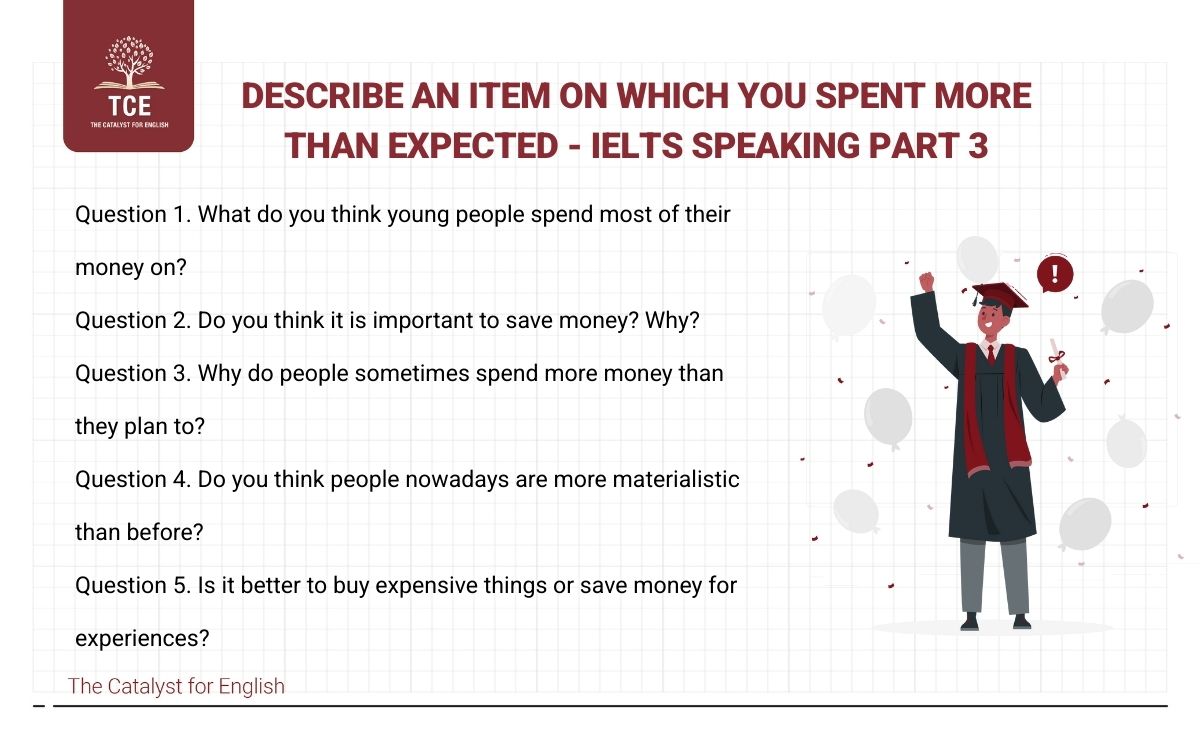
Question 1. What do you think young people spend most of their money on?
In my perspective, the younger generation tends to allocate a significant portion of their budget to lifestyle-related expenses, particularly dining out and social gatherings at trendy cafes. Furthermore, many are brand-conscious and willing to splurge on high-end gadgets or fashionable apparel to keep up with the latest trends. Finally, there is a growing shift toward digital subscriptions and experiential travel, as young people nowadays often prioritize personal gratification and “living in the moment” over long-term savings.
Question 2. Do you think it is important to save money? Why?
Certainly, saving money is of paramount importance as it provides a financial safety net for unforeseen circumstances or emergencies. Beyond that, having a disciplined savings habit allows individuals to invest in their future, such as pursuing higher education or starting a business, which fosters long-term financial stability. Ultimately, it grants people a sense of security and the freedom to make life choices without being constantly burdened by monetary constraints.
Question 3. Why do people sometimes spend more money than they plan to?
From my observation, people often overspend due to clever marketing tactics and the allure of limited-time discounts that trigger impulsive buying. Furthermore, the rise of cashless payments and digital wallets makes it easier for consumers to lose track of their expenses compared to using physical cash. In some cases, individuals might also splurge to gain social validation or simply to relieve stress, which often leads to a phenomenon known as “buyer’s remorse.”
Question 4. Do you think people nowadays are more materialistic than before?
I personally believe that modern society has become significantly more materialistic, largely driven by the omnipresence of social media. Platforms like Instagram and TikTok constantly expose individuals to lavish lifestyles, fostering a culture of “keeping up with the Joneses” and a desire for status symbols. Consequently, many people now prioritize material possessions and outward appearances over traditional values like community or spiritual well-being.
Question 5. Is it better to buy expensive things or save money for experiences?
In my view, striking a balance between the two is ideal, though prioritizing experiences often yields more long-lasting fulfillment. While high-quality possessions can offer daily convenience and durability, memories from traveling or learning a new skill tend to enrich our lives in a more profound way. Ultimately, material goods eventually depreciate in value, whereas personal experiences contribute to our growth and stay with us for a lifetime.
Question 6. How can advertising influence people’s spending habits?
Advertising exerts a powerful influence on consumer behavior by creating artificial needs and exploiting psychological triggers. Through repetitive exposure and celebrity endorsements, brands can convince individuals that a product is essential for their social status or personal happiness. Furthermore, the strategic use of limited-time offers often creates a sense of urgency, compelling people to make impulsive purchases that they hadn’t originally planned for.
Question 7. Do you think young people manage money well?
I believe the ability to manage finances varies among young people, but many nowadays are becoming increasingly financially literate thanks to digital banking apps. While some may still fall into the trap of impulsive spending on trendy items to satisfy their social needs, a growing number of youths are actively learning about investment and budgeting. Overall, although they might lack experience compared to older generations, their access to financial management tools has significantly improved their spending discipline.
V. Đăng ký thi thử tại The Catalyst for English
Bên cạnh việc học và luyện tập, thi thử IELTS giúp bạn làm quen với cấu trúc đề và giảm bỡ ngỡ khi bước vào phòng thi thật, đặc biệt với kỹ năng Speaking vốn dễ gây áp lực tâm lý. Khi tham gia thi thử IELTS 4 kỹ năng tại TCE, bạn sẽ được trải nghiệm môi trường thi sát thực tế và nhận nhận xét chi tiết về phát âm, từ vựng, ngữ pháp cũng như độ mạch lạc. Nhờ đó, bạn có sự chuẩn bị vững vàng hơn và tăng cơ hội đạt điểm cao trong kỳ thi chính thức.
Vậy là The Catalyst for English đã cùng bạn phân tích và trả lời chi tiết cho đề bài Describe an item on which you spent more than expected trong IELTS Speaking Part 2 và Part 3. Hi vọng rằng, với bài mẫu cùng hệ thống từ vựng, idioms hữu ích vừa được chia sẻ, bạn sẽ tự tin hơn khi bước vào phòng thi IELTS Speaking nói chung và khi gặp chủ đề này nói riêng. Chúc các bạn ôn tập hiệu quả và đạt được band điểm mong muốn nhé.
Xin chào, mình là Phương ThảoCo-founder tại The Catalyst for English. Với hơn 7 năm kinh nghiệm đồng hành cùng các bạn học viên trên con đường chinh phục tiếng Anh, IELTS và sở hữu điểm Overall 8.5, mình luôn mong muốn chia sẻ những phương pháp học tập hiệu quả nhất để giúp bạn tiết kiệm thời gian và đạt được kết quả cao.
Tại The Catalyst for English, mình cùng đội ngũ giáo viên luôn đặt 3 giá trị cốt lõi: Connected – Disciplined – Goal-oriented (Kết nối – Kỉ luật – Hướng về kết quả) lên hàng đầu. Bởi chúng mình hiểu rằng, mỗi học viên đều có những điểm mạnh và khó khăn riêng, và vai trò của "người thầy" là tạo ra một môi trường học tập thân thiện, luôn luôn thấu hiểu và đồng hành từng học viên, giúp các bạn không cảm thấy "đơn độc" trong một tập thể.
Những bài viết này được chắt lọc từ kinh nghiệm giảng dạy thực tế và quá trình tự học IELTS của mình, hy vọng đây sẽ là nguồn cảm hứng và hành trang hữu ích cho các bạn trên con đường chinh phục tiếng Anh.
 thecatalyst.edu.vn