“Describe a traditional product in your country” nằm trong nhóm chủ đề Describe an object, yêu cầu thí sinh trình bày về một sản phẩm tiêu biểu gắn liền với bản sắc văn hóa dân tộc. Đây là chủ đề quan trọng và thường xuyên xuất hiện trong Part 2 IELTS Speaking. Trong bài viết dưới đây, The Catalyst for English sẽ gợi ý bài mẫu kèm theo hệ thống từ vựng và cấu trúc câu hữu ích, giúp bạn tự tin cải thiện band điểm như mong muốn.
I. Phân tích đề bài Describe A Traditional Product In Your Country
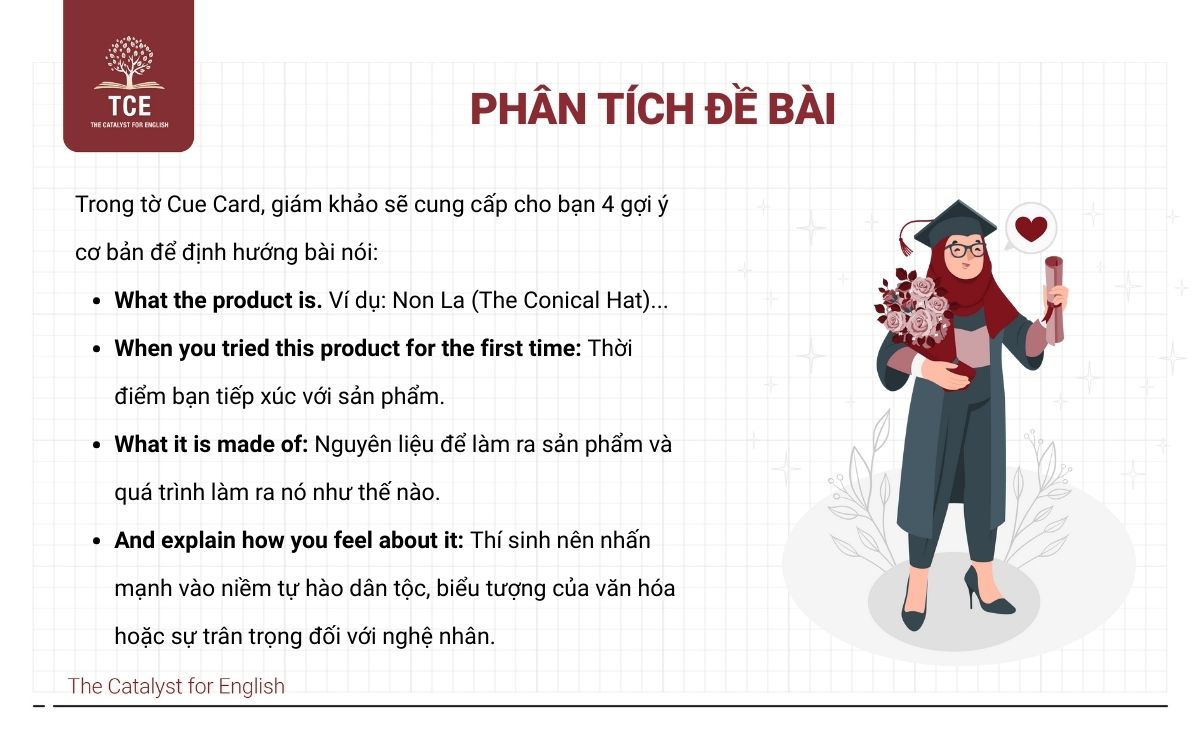
Khi nhận được tờ Cue Card, bạn cần bám sát 4 câu hỏi chỉ dẫn để đảm bảo bài nói có cấu trúc mạch lạc và không bị lạc đề:
- What the product is (Xác định rõ tên sản phẩm). Ví dụ: Non La (The Conical Hat) hoặc Bánh Chưng (Square Glutinous Rice Cake).
- When you tried this product for the first time: Thời điểm bạn tiếp xúc với sản phẩm. Đừng chỉ đưa ra một mốc thời gian khô khan mà hãy gắn nó với một kỷ niệm như dịp Tết, một chuyến đi thực tế hoặc từ thời thơ ấu.
- What it is made of: Bạn nên nói về nguyên liệu để làm ra sản phẩm đó là gì (lá cọ, tre, gạo nếp, lụa…) và quá trình làm ra nó như thế nào (handmade, meticulous process).
- And explain how you feel about it: Phần này quyết định tính “chạm” của bài nói. Thí sinh nên nhấn mạnh vào niềm tự hào dân tộc (national pride), biểu tượng của văn hóa (cultural symbol) hoặc sự trân trọng đối với nghệ nhân.
II. Từ vựng miêu tả sản phẩm truyền thống
Tiếp theo hãy cùng TCE tìm hiểu một số từ vựng hữu ích cho đề bài describe a traditional product in your country nha:
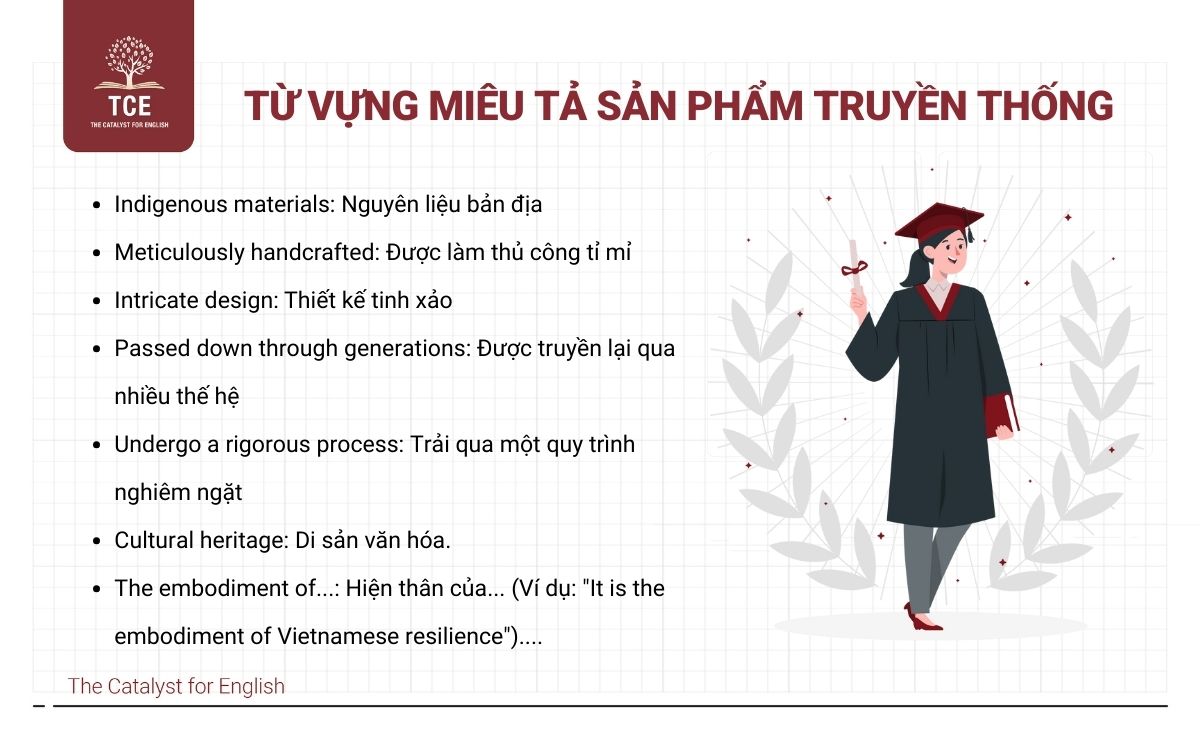
- Indigenous materials: Nguyên liệu bản địa
- Meticulously handcrafted: Được làm thủ công tỉ mỉ
- Intricate design: Thiết kế tinh xảo
- Passed down through generations: Được truyền lại qua nhiều thế hệ
- Undergo a rigorous process: Trải qua một quy trình nghiêm ngặt
- Cultural heritage: Di sản văn hóa.
- The embodiment of…: Hiện thân của… (Ví dụ: “It is the embodiment of Vietnamese resilience”).
- Deep-seated tradition: Truyền thống lâu đời, ăn sâu vào tiềm thức.
- Historical significance: Ý nghĩa lịch sử.
- To preserve the national identity: Gìn giữ bản sắc dân tộc.
- A testament to…: Một minh chứng cho… (Ví dụ: “A testament to our ancestors’ creativity”).
III. Bài mẫu describe a traditional product in your country part 2
I’m going to talk about Vietnamese ground coffee which is one of the products of my country that I really love. As a matter of fact, we are the second largest coffee exporter in the world and drinking coffee is a big part of Vietnamese culture. We usually make ourselves a cup of coffee after breakfast and for us, it’s a great way to kick off a new day. The most popular type of coffee here is Robusta which has a stronger and more bitter taste than others. It’s mainly grown in the Central Highlands regions of coffee and Buon Ma Thuot is famous as the capital city of coffee. If I’m not mistaken, I first tried it when I was still little. At that time, my mother was a coffee addict and she drank it on a daily basis so I was curious to know what it tasted like. I asked her to give me a few spoons and from that moment on, I have become a fan of coffee. There are different drinks made from coffee that you can find here but my favorite one is Ca Phe Sua Da. Just so you know, it’s Vietnamese iced coffee mixed with sweetened condensed milk. There are several reasons why I’m into this traditional product. For one thing, it is a healthy drink if you use it in moderation. I mean it boosts my energy levels and keeps my mind awake so I’ll become more productive throughout the day. It also helps me lower the risk of getting certain diseases like type 2 diabetes or even cancer. For another, its price is quite affordable compared to other types of beverages so it’s suitable for a student like me. If you’re looking for a souvenir for your friends and family back home, I highly recommend Vietnamese ground coffee.
Từ vựng ghi điểm:
| Từ |
Phiên âm |
Ý nghĩa |
| As a matter of fact |
/æz ə ˈmætər əv fækt/ |
Thực tế là |
| Kick off a new day |
/kɪk ɔːf ə nuː deɪ/ |
Bắt đầu một ngày mới |
| A big part of [something] |
/ə bɪɡ pɑːrt əv/ |
Một phần quan trọng của cái gì đó |
| On a daily basis |
/ɒn ə ˈdeɪli ˈbeɪsɪs/ |
Hàng ngày |
| Ground coffee |
/ɡraʊnd ˈkɔːfi/ |
Cà phê bột/cà phê xay |
| Exporter |
/ekˈspɔːrtər/ |
Nhà xuất khẩu |
| Bitter taste |
/ˈbɪtər teɪst/ |
Vị đắng |
| Sweetened condensed milk |
/ˈswiːtnd kənˈdenst mɪlk/ |
Sữa đặc có đường |
| Coffee addict |
/ˈkɔːfi ˈædɪkt/ |
Người nghiện cà phê |
| In moderation |
/ɪn ˌmɑːdəˈreɪʃn/ |
Một cách điều độ, có chừng mực |
| Boost energy levels |
/buːst ˈenərdʒi ˈlevlz/ |
Thúc đẩy/tăng cường mức năng lượng |
| Productive |
/prəˈdʌktɪv/ |
Làm việc hiệu quả, năng suất |
| Lower the risk of |
/ˈloʊər ðə rɪsk əv/ |
Giảm nguy cơ |
| Affordable |
/əˈfɔːrdəbl/ |
Giá cả phải chăng, vừa túi tiền |
IV. Bài mẫu describe a traditional product in your country part 3
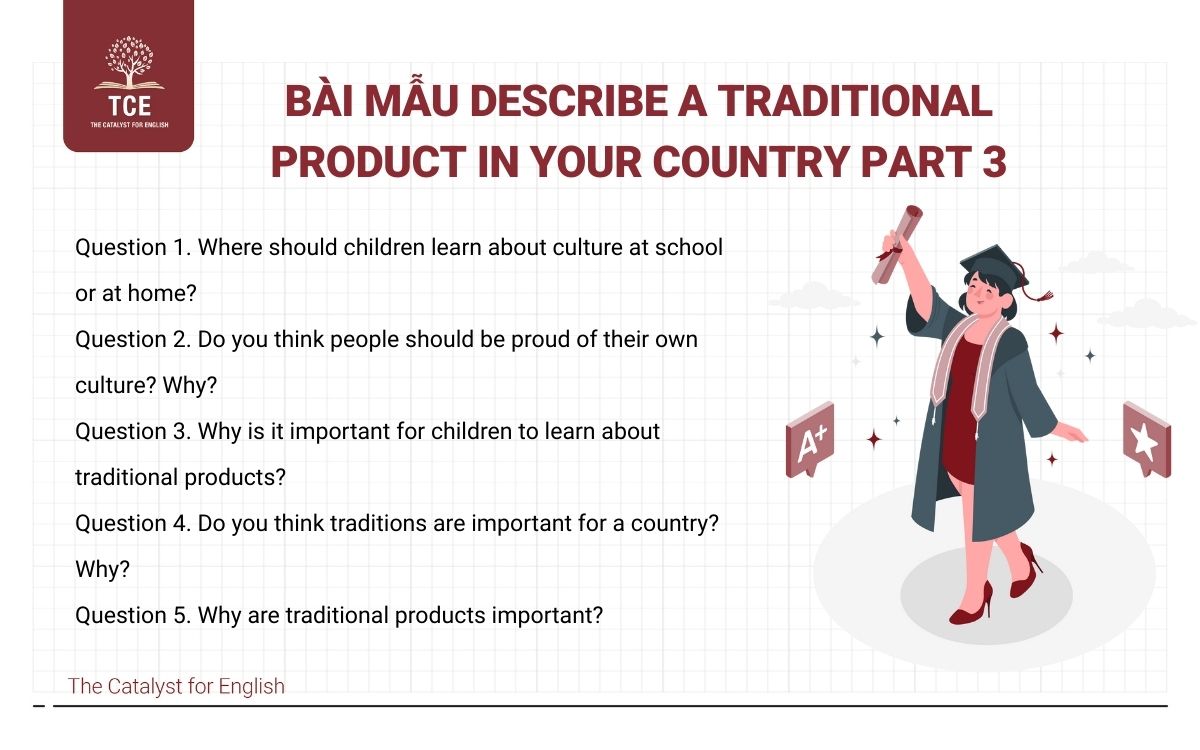
Question 1. Where should children learn about culture at school or at home?
Honestly, I believe children benefit most when culture is taught both at home and at school. At home, they build a personal, emotional connection through family traditions—for instance, I still cherish the memory of my grandmother teaching me how to make traditional sweets for festivals. School, on the other hand, exposes them to a broader spectrum of cultures. Through classroom discussions and organized events, it actively encourages open-mindedness. I think combining both environments helps children develop a well-rounded appreciation for their own heritage as well as the traditions of others.
Question 2. Do you think people should be proud of their own culture? Why?
Absolutely! Without a doubt, being proud of one’s culture fosters a strong sense of identity and belonging, which is fundamental. For example, I personally feel a surge of pride when I see Indian art or music being celebrated internationally. Furthermore, embracing your own culture inherently encourages a respect for diversity; when you value your own background, you’re naturally more inclined to appreciate the richness of others.
Question 3. Why is it important for children to learn about traditional products?
Learning about traditional products connects children to their roots in a tangible and meaningful way. It’s not just about the objects themselves, but the history, craftsmanship, and values embedded within them. For instance, when I discovered the intricate process behind making Pashmina shawls, I gained a profound respect for the artisans and the incredible patience required for such detail. I believe this awareness encourages children to support local traditions, ensuring these invaluable skills are preserved for future generations – which feels particularly vital in our rapidly modernizing world.
Question 4. Do you think traditions are important for a country? Why?
Definitely. I believe traditions are the backbone of a country’s unique identity and character. Beyond just being customs, they serve as a social glue, binding people together through shared rituals and celebrations. Take national festivals like Diwali or Holi, for example; they have this incredible power to bring entire communities together, often transcending social or economic backgrounds. Moreover, traditions provide a sense of continuity, acting as a bridge between the past and the present, which lends a much deeper meaning to our collective experiences.
Question 5. Why are traditional products important?
I would argue that traditional products are vital precisely because they embody a nation’s history, creativity, and core values. Beyond their cultural significance, they provide a lifeline for local artisans, helping to preserve age-old techniques that might otherwise fade into obscurity. These products offer a tangible link to our heritage. For instance, whenever I purchase a handcrafted item from a local market, I feel as though I’m making a small but meaningful contribution to the survival of a unique art form. Ultimately, these products keep our cultural identity vibrant and alive for generations to come.
Trên đây là bài mẫu cho chủ đề “Describe a traditional product in your country” – một dạng câu hỏi quen thuộc trong IELTS Speaking. Hy vọng rằng bài mẫu của The Catalyst for English đã giúp các bạn hình dung rõ cách triển khai ý, sử dụng từ vựng và cấu trúc câu phù hợp để hướng tới band điểm mong ước.
Để chuẩn bị tốt hơn cho kỳ thi IELTS, bạn nên thường xuyên tham gia các buổi thi thử nhằm làm quen với áp lực phòng thi, nhận diện điểm yếu và điều chỉnh chiến lược làm bài hiệu quả hơn. Đừng bỏ lỡ kỳ thi thử IELTS tại TCE để tự tin bứt phá và chinh phục mục tiêu IELTS của mình nhé.
 thecatalyst.edu.vn